


Adhering to food safety standards is vital in the food manufacturing industry.
Regulatory authorities such as the FDA & the FSMA are setting ever higher standards, which can feel more restrictive. Meanwhile, consumers demand more transparency in operations, requesting that companies can trace the source of ingredients, and ensure products are produced sustainably and with the highest quality standards. How can you match the market needs as well as regulatory requirements but remain competitive?
Bearing in mind the FDA Food Safety Modernisation Act (FSMA) is aiming to shift the focus from responding to contamination issues to preventing them, are you going to be compliant?
This doesn’t just apply to those manufacturing in the USA, but all overseas facilities that export to the USA too.
Coupled production systems where the fixed mixer is directly linked up to the packing line can be cumbersome in this scenario. How can you be sure that every last bit of the line is contaminant free? If you are to be sure, how long will it take to make a full clean-down and validation?
Here at Matcon we have experience of designing IBC system solutions for both the pharmaceutical and food industry sectors. With high hygiene standards built in and the ability to track recipe batches, product can be safely and transparently produced.
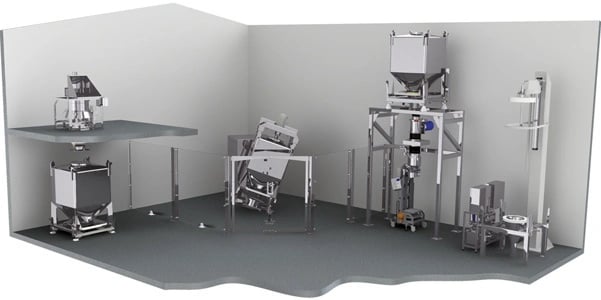
A Matcon IBC solution provides peace of mind by using individual, sealed containers to hold each production batch. Every batch is kept separate from the next, and material is transferred between process steps without exposing powders to the surrounding environment. The whole system remains fully closed at all times, from filling through blending and onward to packing, significantly reducing the risk of cross-contamination in the end product, improving allergen control and creating a cleaner, safer working environment for the workforce.
Our systems are engineered to meet strict FDA regulations and are designed with GMP principles at their core. Contact surfaces are selected to be compliant with food-grade requirements, equipment layouts support clear product and personnel flows, and the design facilitates documented cleaning and validation procedures. This enables manufacturers to demonstrate robust control of hygiene risks and to provide the level of traceability and audit readiness increasingly expected by regulators and brand owners.
Further benefits include reduced cleaning times, which helps to minimise downtime between batches, support efficient changeovers and reduce the consumption of water, energy and cleaning agents. Read more about the Matcon approach to allergens and food regulations here.
Although we can deliver to these high food safety standards, production flexibility is not compromised. You can still produce to order and accommodate high recipe variation. Speak to our team to learn more.